HOB user story: Cutting without pre-scoring
Panel cutting without scoring – possible, but prone to errors. If the coating chips, rework can be time-consuming. The carpentry shop Moser approached the tool manufacturer Leitz with this issue. The result: a saw blade with an integrated scoring unit – just in time for Leitz’s 150th anniversary.
For decades, scoring has been an integral part of panel cutting. Without the scoring unit, tear-out would occur at the exit edge. However, this step extends processing time and increases setup effort. It is therefore no surprise that companies ask themselves: could it work without it? This question also arose in Haslach, Kinzigtal, in the Black Forest—more precisely at the carpentry shop Moser. Around 150 employees work here, with a high proportion of women, and a clip system is used to manage workflows.
Chipped coatings lead to rework
In addition to wood-based materials and coated panels, mineral materials also pass through the halls of this company. Complex coatings in particular proved to be a consistent problem: the porous layer chipped during sawing. A great deal was tried, recalls CNC team leader Marco Arnold, and a lot of trial-and-error costs were incurred. Yet the demanding cutting tasks remained, and mitre cuts continued to cause tear-out.
Arnold can quantify it: on average, machining a panel took around 45 seconds, the process was extended primarily by scoring. Including the subsequent rework, his team used to need about twenty percent more time than today. So what is different at Moser today compared to back then?
A secret between manufacturer and user
Around one and a half years ago, the question arose once again: what could an alternative to scoring look like? Moser turned to Leitz for answers. The two companies have been linked by a long-standing, trust-based partnership. In fact, the tool manufacturer from Oberkochen not only knew the question, but also the answer—and had already been refining an approach.
However, this solution initially had to remain confidential. At Moser, an agreement was signed, and strict confidentiality was maintained regarding the innovative saw blade.
From the first prototype to a flexible saw blade
The secret: a diamond-tipped saw blade with an integrated scoring unit. A farewell to the separate scoring aggregate? Curiosity and scepticism alternated, recalls Marco Arnold. His team immediately tested the prototype on both wood-based and mineral materials. The mix of materials in particular is demanding, he explains.
In day-to-day operations, materials and coatings change frequently, requiring a high degree of flexibility from the saw blade. While the first version still caused tear-out, the results of the second were already convincing. The tool has been in operation since November.
Twenty minutes less for rework
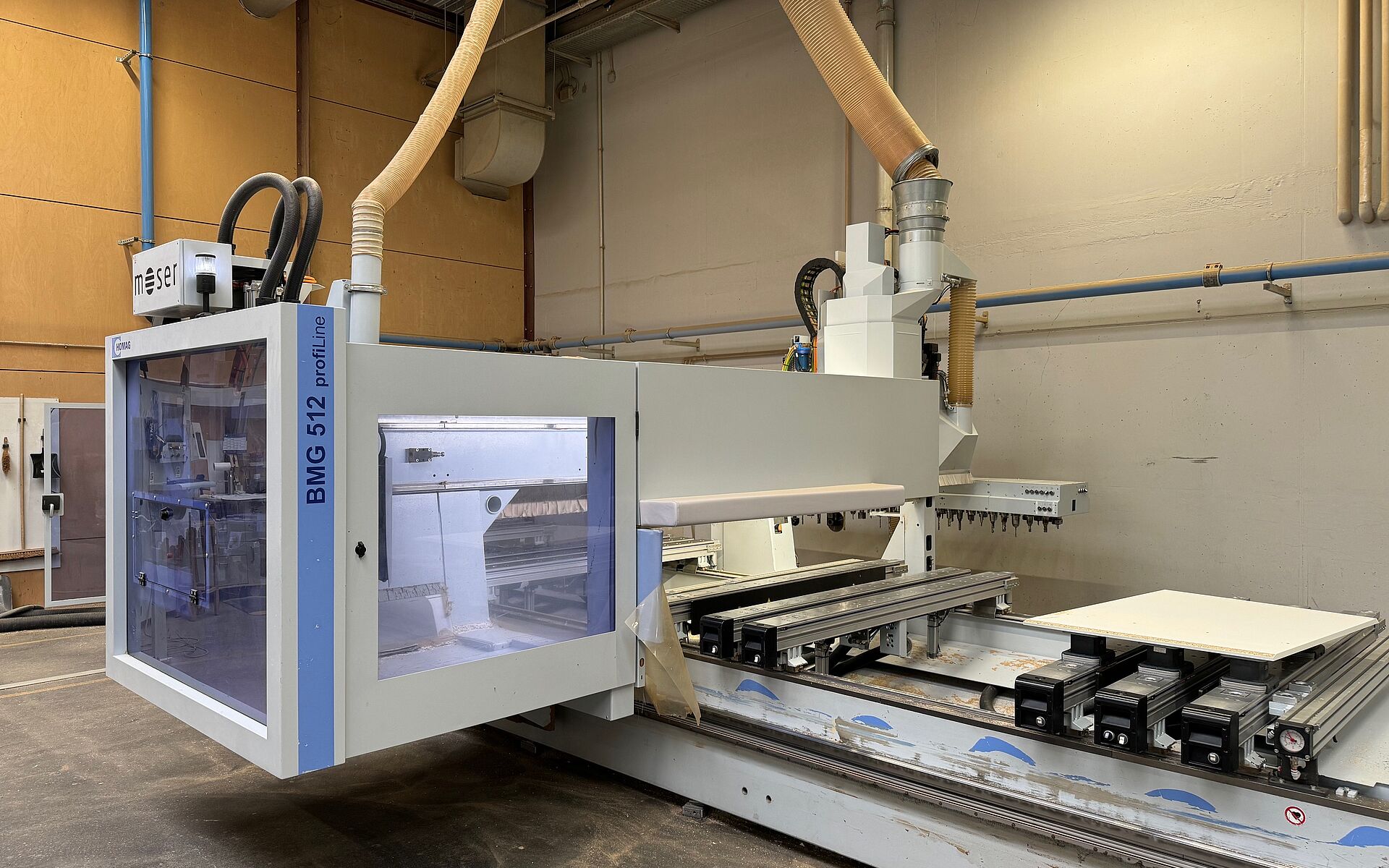
However, FineCut is not used on a sliding table saw, nor on a panel sizing saw — although Leitz developed it for both. At Moser, the saw blade was deployed in a CNC machining centre. The difference is noticeable in daily operations and thanks to the clean-cut edges most reworks are eliminated and mitre cuts are immediately ready for assembly.
For comparison: before FineCut, up to twenty minutes of finishing work were required after cutting. Now, the edges are sharp enough to cut yourself on them. This even happened to Marco Arnold during the initial tests: “When I started bleeding, I thought—this has to be good.”
2.250 Meter bis zum Wechsel oder Service
Setup times have also changed. Since machine operators no longer need to adjust a scoring unit, workflows on the CNC machines have become significantly simpler. Tool life is another factor: the saw blade ran for two months before the first replacement. During this period, it covered 2,250 meters without requiring any interim adjustments.
Now a change is due, handled by the service team of Leitz. FineCut can be resharpened up to three times.
Diamond-tipped teeth ensure clean material separation
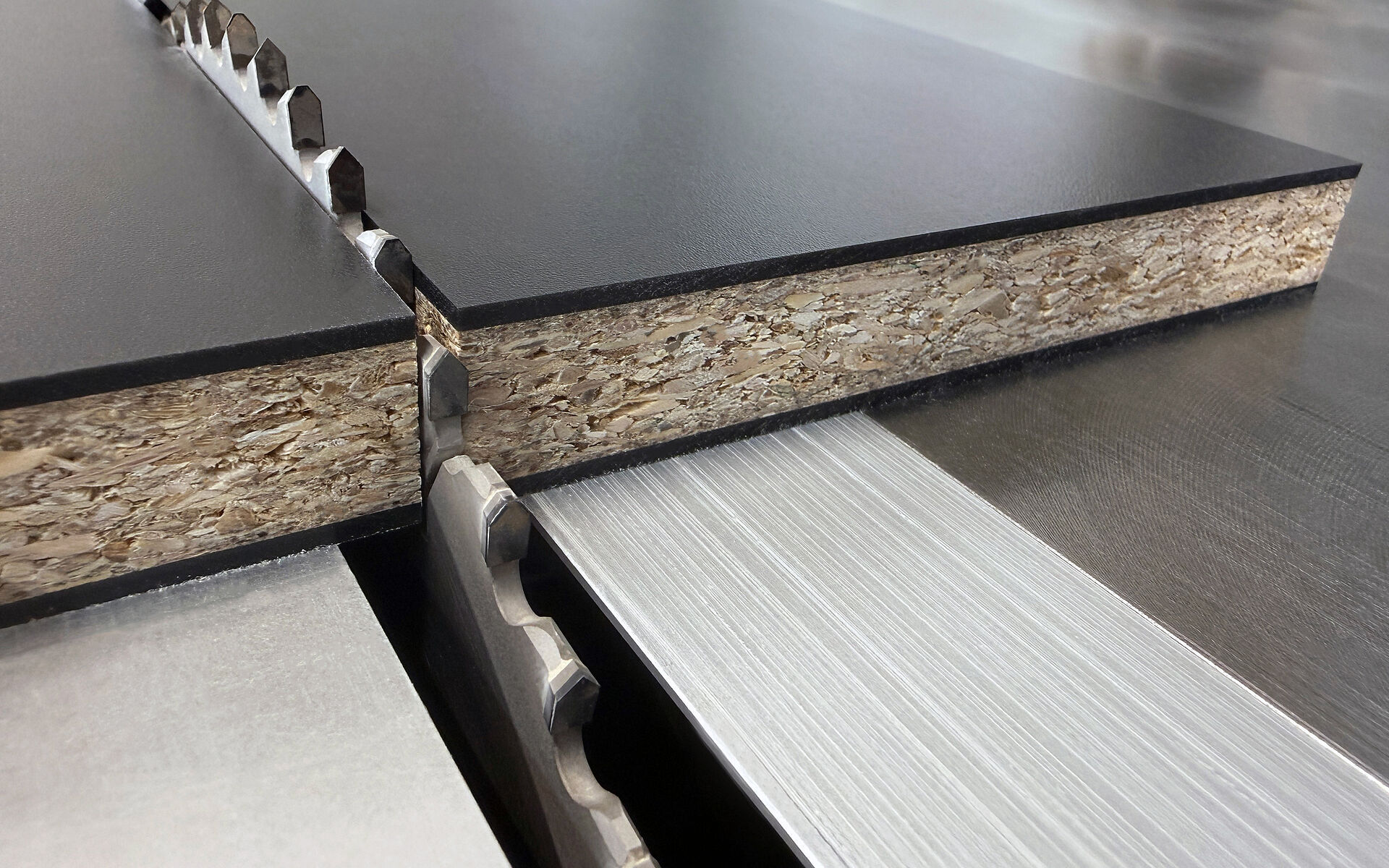
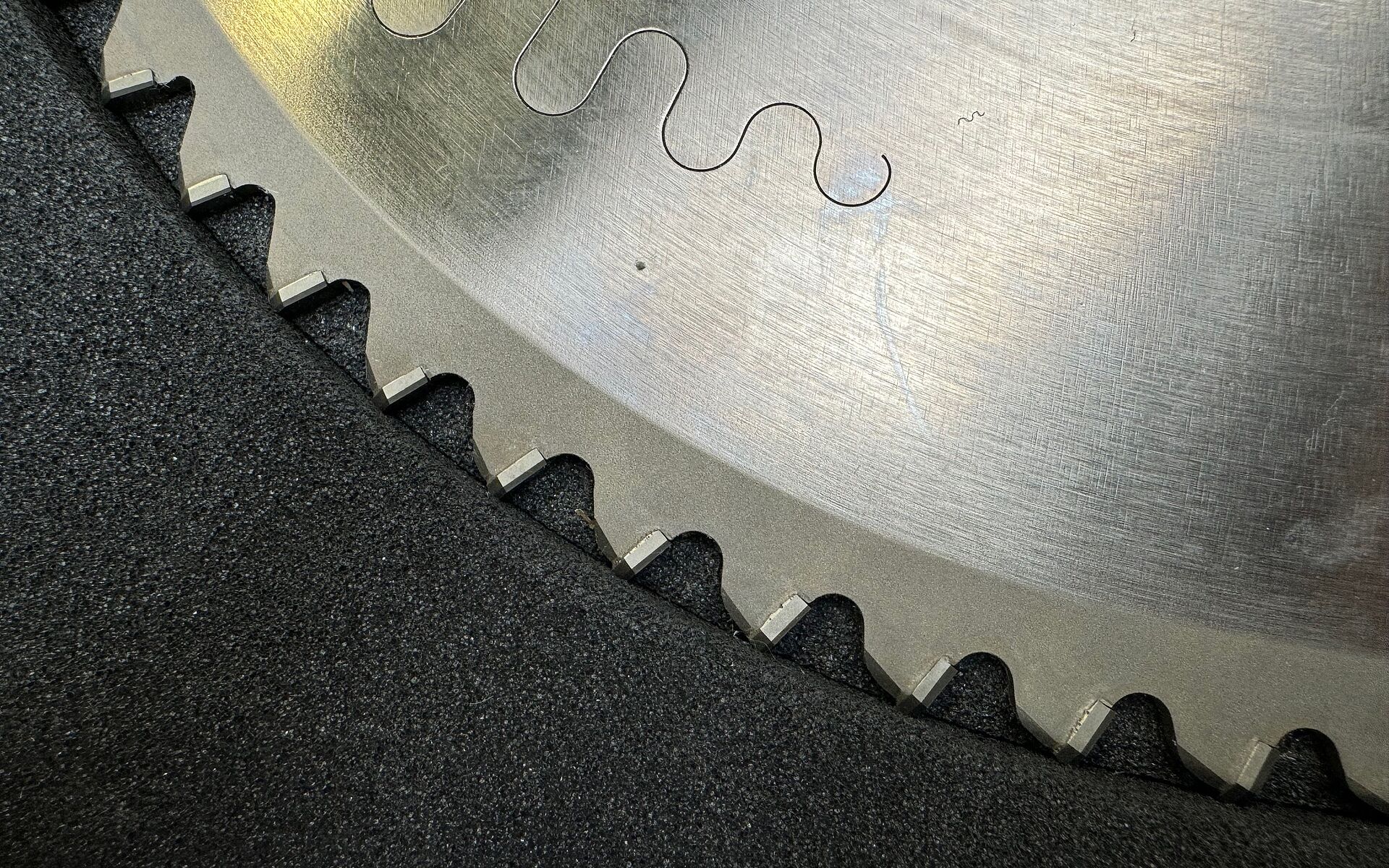
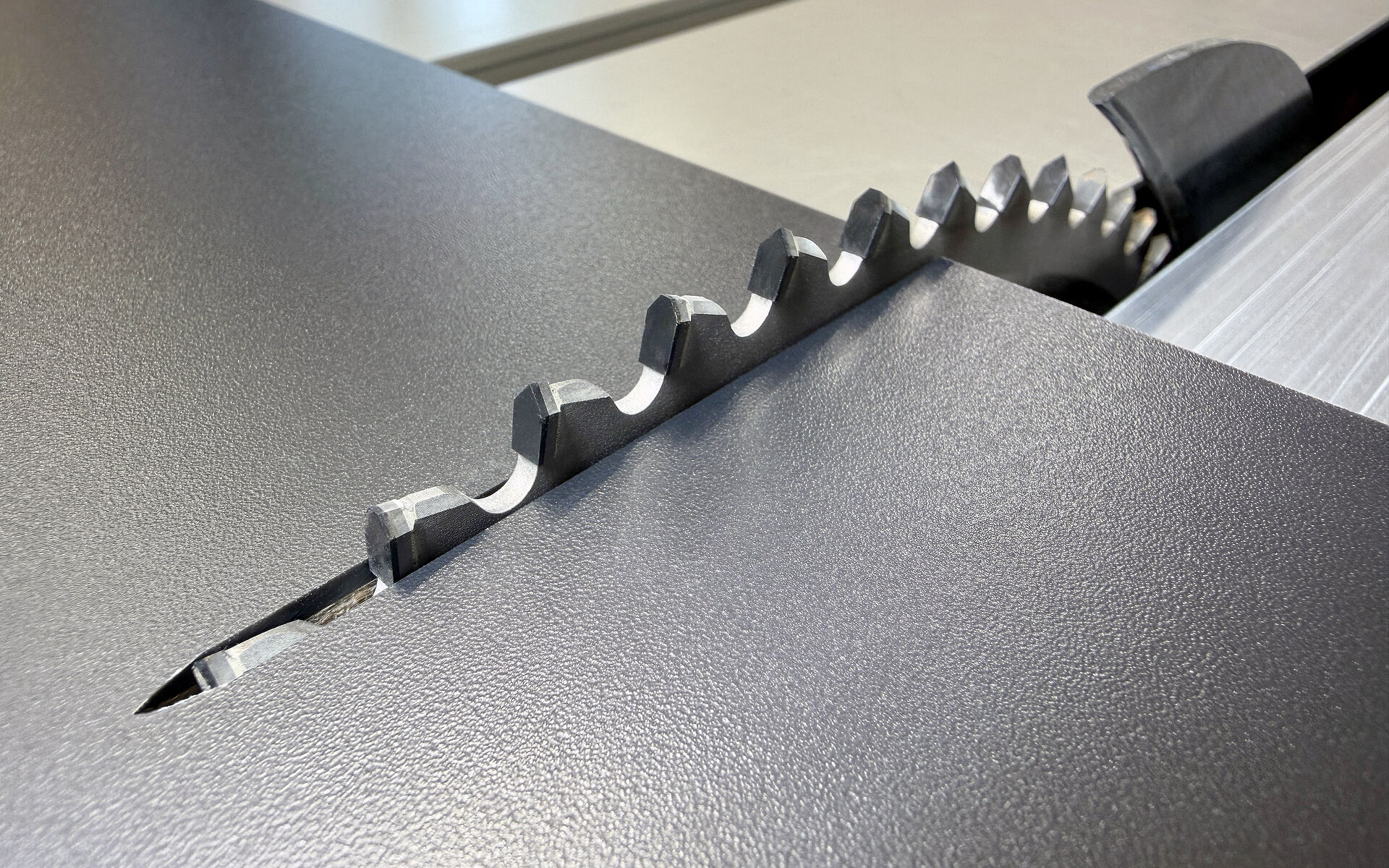
Technically, the tool is based on a specialized tooth geometry. Alternating bevel and trapezoidal teeth distribute the cutting forces evenly and stabilize the separation process. At the same time, a negative rake angle ensures controlled material separation on the exit side. This prevents the chipping of coatings and, as intended, replaces the need for a scoring unit.
The blade body, meanwhile, ensures high concentricity. Expansion slots and laser-cut ornaments act as vibration dampers and further stabilize the cut. Leitz states that the diamond-tipped cutting edges achieve significantly longer tool life compared to conventional carbide.
A cost-effective tool for mixed materials
Not only the technical features matter for Moser, but above all the practical benefits. The key factor: cutting is simpler and rework remains manageable. “From an economic standpoint in particular, the solution is compelling,” says CNC team leader Marco Arnold. Comparable tools are available on the market, but they are priced above FineCut.
So, could this saw blade gain wider acceptance? Before answering, Arnold points to the smooth running of the tool. He doesn’t need to raise his voice to respond. Yes, he says—especially for companies with a similar mix of materials. In Haslach in the Kinzig Valley at least, a long-standing question has now been definitively answered.